
Sex Offenders Search
FibercodeLifestyle
4.0344.00 Reviews
- Version
- 2.6.5
- Installs
- 50.00K
- Age Rating
- Everyone
Screenshots
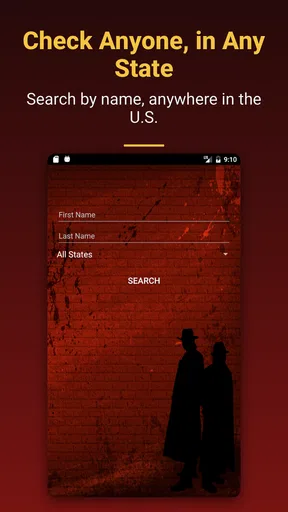
Our Review of Sex Offenders Search
 Analysis by Appyee
I would treat a neighborhood search as one small part of making a thoughtful decision, not as a shortcut to judging a place or a person. Sex Offenders Search is a paid lifestyle app from Fibercode that focuses on looking up registered offenders near an address. Its purpose is narrow, which can be useful when I want a specific kind of public-record information rather than another broad safety app. I’d approach the results calmly, check details before acting on them, and use the information as context—not as a complete picture of anyone’s safety.
What the $1.99 purchase means
The app costs $1.99. That makes it a paid download, not a free search tool, so the practical question is whether this particular lookup is something I expect to use. Its average rating is 4.0 from around 875 ratings, and it has been installed over 50,000 times. Those figures suggest that people have found a reason to try it, but they don’t tell me whether it will fit every user’s needs or how current a particular search result is.
I wouldn’t confuse the purchase price with a promise of complete coverage or ongoing monitoring. The confirmed price tells me what the app costs to obtain; it doesn’t establish what every feature includes or whether anything else is charged for. Before relying on any optional function, I’d read the purchase and account prompts carefully. If all I need is an occasional check, I’d compare the cost with the effort of looking up the relevant public records directly. If I expect to consult it at several addresses, the convenience may matter more to me than avoiding a small one-time outlay.
How I’d use a neighborhood lookup
I’d use a neighborhood lookup as a prompt for a careful next step, not as a verdict on a street or its residents. Before searching, I’d decide what I need to learn and how I’ll verify anything that could affect a move or family decision. That keeps the results in proportion and makes it easier to use the map thoughtfully.
Start with a specific question
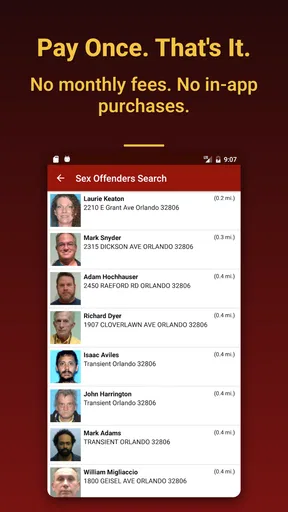
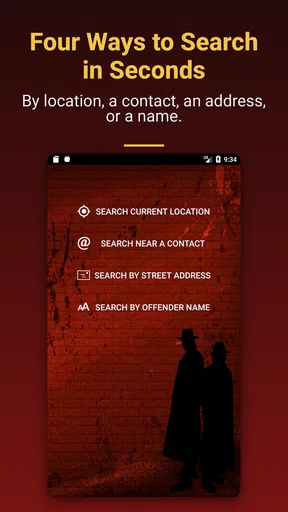
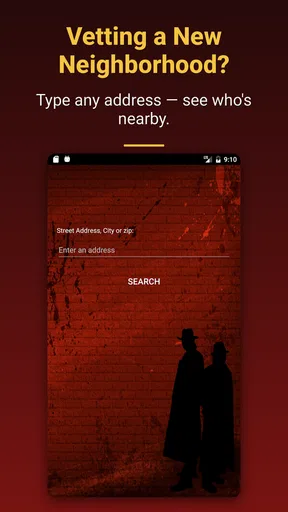
When I first launched the Sex Offenders Search app, I was immediately impressed by its clean, intuitive interface. You don’t need to be a tech wizard to navigate through it. The app opens with a simple search bar that invites you to enter any address. It’s straightforward: just type in your home address, or perhaps the address of that new place you’re considering moving to, and voilà! You get a list of registered sex offenders in the vicinity.
That simple workflow is most useful when I already know what I’m checking. For example, if I’m considering a rental, I can look up its address before arranging a visit, then decide whether I want to investigate further. For a move, I’d check the exact property rather than rely on a broad impression of a town or neighborhood. I’d also repeat the search for places that shape daily routines, such as a relative’s home, instead of assuming one address tells me everything about a wider area.
A practical tip is to keep the question narrow: “What public-record information appears near this address?” That framing helps prevent the search from turning into a sweeping judgment about a community. A result near a location doesn’t, by itself, explain the circumstances, current risk, or what precautions are sensible. I’d use the lookup to identify something worth verifying, not to make decisions based on a map marker alone.
Map context and the limits of alerts
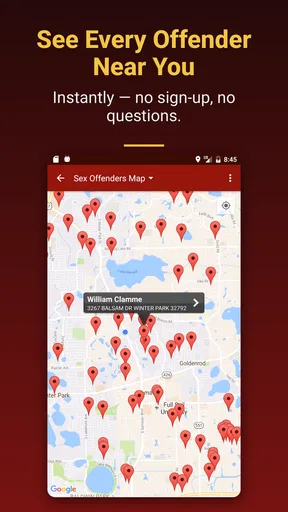
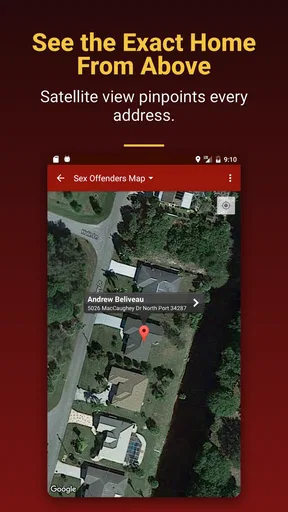
The app is packed with features that make it more than just a simple search tool. One of the highlights is the map view. It’s not just a bland list of names; you can actually see the locations of offenders plotted on a map. This visual representation makes it easier to understand the proximity and density of offenders around any area.
The map can help me compare nearby streets more quickly than a list, especially when I’m unfamiliar with an area. Still, visual closeness can be misleading: a pin is a location reference, not a measurement of danger or a complete account of someone’s history. I’d use the map to decide which entries need a closer look, then read the accompanying information carefully and check an appropriate official source if something could affect a major decision.
There's also a feature to set up alerts. I found this particularly useful. You can configure notifications to inform you if a new offender registers in your area. It’s like having a watchdog looking out for your safety.
I’d think of alerts as a prompt to review information, rather than a guarantee that I’ll be warned about every relevant change. Notifications can support a routine, but they shouldn’t replace occasional checks when I have a concrete reason to look at a particular address. If I’m setting up an alert, I’d first decide what area I actually care about and whether I’m comfortable creating an account for that convenience. That makes the trade-off clearer than enabling notifications simply because the option is there.
Privacy, verification, and responsible use
Now, I know what you’re thinking: what about privacy? Well, the app takes this seriously. It doesn’t require you to input any personal information to get the basic search results. However, if you want to set up alerts, you’ll need to create an account. Even then, it reassures users by not sharing personal data with third parties.
That distinction gives me a sensible way to approach the app: use the basic search when I only need a quick lookup, and consider the account step only if alerts are worth it to me. I’d avoid entering information that isn’t necessary for the task and take a moment to review any account or notification choices on screen. For someone who prefers not to create accounts, the basic search may be the more comfortable way to use it.
For a realistic everyday example, imagine I’m helping a family member compare two possible homes. I could search each address, note what appears, and then treat the findings as one consideration alongside ordinary visits, local information, and the family member’s own priorities. I wouldn’t forward a list as a warning about a neighbor or draw conclusions from a name alone. The useful outcome is a better-informed conversation, not a license to confront or harass anyone.
The app’s audience is also defined by its subject matter. It is intended for people who have a legitimate reason to consult offender-registration information, such as checking a prospective home or staying informed about a family’s surroundings. It is not a general emergency service, a substitute for local authorities, or a complete personal-safety plan. If I needed immediate help or advice about a specific threat, I’d turn to the relevant local professionals rather than rely on a search app.
Why this kind of information matters
The app serves an important purpose. In a world where safety is paramount, knowing who lives in your area can offer peace of mind. I personally feel more secure having this information at my fingertips, especially if you have kids or elderly family members living with you.
For families, I think the most constructive use is as a starting point for practical conversations: how children can ask a trusted adult for help, how household members can stay in touch, and what to do if something genuinely concerning happens. A search result can prompt awareness, but it cannot replace age-appropriate guidance or attentive supervision. The same applies to someone living alone: a lookup may inform a choice, but sensible habits and support from people nearby still matter.
Compared with checking public records through a browser, a dedicated app can make an address search feel more direct and put map-based context in one place. A browser or official registry may be preferable when I need to confirm a record, understand the source, or examine details outside the app’s focused workflow. On the other hand, a broad neighborhood or home-security app may cover more kinds of safety concerns, but it may not be as centered on this specific lookup. I’d choose based on the question I’m trying to answer, rather than expect one tool to handle every kind of safety planning.
What the results can’t settle
While the app is comprehensive, it's important to remember that it only provides information on registered offenders. There might be unregistered individuals who pose risks, so it’s always best to stay informed and take additional safety measures.
Also, the accuracy of the data depends on public records. It’s generally reliable, but always good to double-check if you have specific concerns.
Those limitations are central to how I’d use the app. Registration information is not a prediction of what a person will do, and a missing result is not proof that an area has no safety concerns. If a search could influence a housing choice or another consequential decision, I’d verify the relevant details through an appropriate official source instead of treating an app display as the final word. If I can’t interpret a result confidently, I’d pause and seek clarification rather than share it as fact.
There’s also a human cost to careless use. I wouldn’t use a location result to approach someone, post identifying details, or encourage neighbors to target a person. The most responsible value here is private awareness and careful verification. That approach keeps the tool focused on informed decisions instead of fear or rumor.
Who is likely to find it worthwhile?
The app runs on Android with a minimum OS requirement of 5.0, and its content rating is Everyone. Its current version is 2.6.2; it was released on February 16, 2010. Those details make it easier to judge basic compatibility and the kind of listing to expect, though I’d still check that my device can install the current release before paying.
I’d consider it if I regularly check addresses, value a dedicated search workflow, or want the option of alerts and are comfortable with the account step that alerts require. The developer is Fibercode, and the app has 342 reviews alongside its rating history. As with any app handling sensitive subject matter, I’d judge it by how well it serves my actual lookup needs, not by popularity alone.
I’d skip it if I only want a one-time answer and would rather consult public records directly, if I’m looking for a broad neighborhood safety platform, or if a map result would make me more anxious without helping me take a useful next step. It is also a poor fit for anyone expecting a definitive safety score, a complete record of every risk, or a replacement for official confirmation. In those situations, another source—or no app at all—may be more appropriate.
My buying verdict
All in all, the Sex Offenders Search app is a powerful tool for enhancing personal safety. It combines ease of use with essential features that can help you make informed decisions about your environment. If you're concerned about safety, this app is definitely worth a download.
My recommendation is more specific: I’d pay $1.99 for it if I expected to check multiple addresses or wanted the convenience of a focused lookup, while keeping the limits of public-record information in mind. For an occasional search, I’d weigh that convenience against checking relevant records another way. The app’s appeal is its straightforward focus, not a promise that one search can settle every concern.
Remember, being informed is the first step to staying safe. So why not give it a try and see how it works for you?
Verdict
Strengths of Sex Offenders Search
- Comprehensive database coverage.
- User-friendly interface design.
- Real-time updates for accuracy.
- Customizable search filters.
- Free to download and use.
Limitations of Sex Offenders Search
- Limited offline functionality.
- Some ads in the free version.
- Requires internet for updates.
- Occasional slow loading times.
- Not available in all regions.
Similar Picks in This Category
View All
SmartThings
Samsung Electronics Co., Ltd.4.6

Google Home
Google LLC4.0

Pinterest4.2

Astrotalk - Talk to Astrologer
Astrology & Horoscope4.7

My Verizon
Verizon Consumer Group4.5

Samsung Wallet (Samsung Pay)
Samsung Electronics Co., Ltd.4.1
Frequently Asked Questions
What is the main purpose of the Sex Offenders Search app?
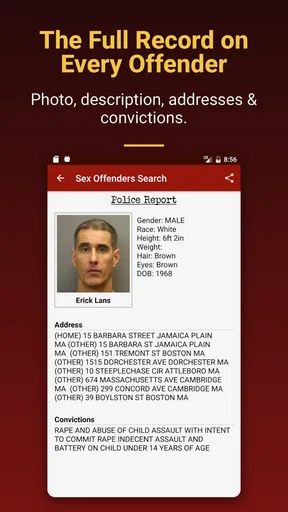
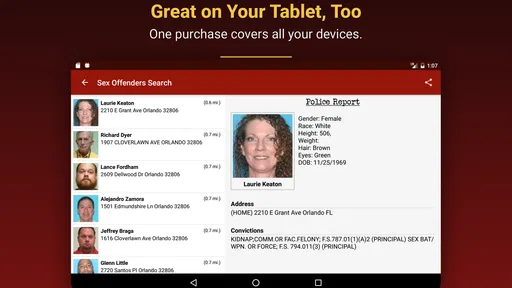
The Sex Offenders Search app is designed to help users locate registered sex offenders in their area. It provides information on offenders’ names, photos, and details of their convictions. By offering this data, the app aims to assist individuals in making informed decisions about their safety and the safety of their families.
How accurate is the information provided by the app?
The app sources its data from public records and government databases, ensuring a high level of accuracy. However, users should be aware that there may be occasional discrepancies due to delays in updating official records. Regular updates by the app aim to maintain the most current information available.
Is the Sex Offenders Search app available for both Android and iOS devices?
Yes, the app is available for download on both Android and iOS platforms. Users can find it on the Google Play Store and the Apple App Store, ensuring a broad accessibility for those wishing to use the app across different devices.
Does the app require a subscription or is it free to use?
The basic features of the Sex Offenders Search app are typically free to use, allowing access to essential information about registered offenders. However, some advanced features or detailed reports may require a subscription or in-app purchase, depending on the app’s pricing model.
How does the app protect user privacy and data security?
User privacy and data security are paramount for the app. It employs encryption and secure connections to protect user data. Additionally, the app does not require unnecessary permissions, minimizing risks related to personal information. Users are advised to review the app’s privacy policy for detailed information on data handling practices.
